Attending the 2026 Media and Development Conference organised by the Centre for Journalism Innovation and Development (CJID) in Abuja was an experience that left me with a lot to reflect on. Beyond meeting journalists, media executives, researchers and development professionals from different parts of Africa, the conference offered me an opportunity to learn, listen and reconsider some of the challenges and responsibilities of being a journalist.
The conference, which was held under the theme “Media, Technology and the Future of Democratic Societies,” brought together conversations about artificial intelligence, press freedom, media sustainability, misinformation and the future of democracy.
Speaking at the conference Dapo Olorunyomi, Chief Executive Officer (CEO) of the Centre for Journalism Innovation and Development (CJID) said “Information integrity is not a luxury reserved for wealthy democracies or well-funded media organisations. It is a public good.”
His remarks reminded every journalist that journalism goes beyond publishing stories and chasing headlines. It is about providing people with reliable information, holding those in power accountable and helping citizens understand the society they live in.
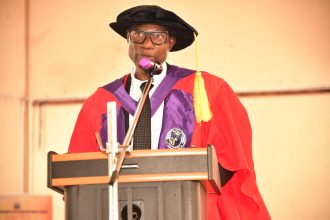
For his part, Professor Umar Pate, CJID Board Chair and the Director of the Centre for Journalism and New Media Studies, Bayero University, Kano, while delivering the closing reflections at the 2026 Media and Development Conference identified five critical components of a sustainable media business: revenue, relevance, reputation, resilience and reach. He explained that technology could serve as an enabler across all five areas, but media organisations must also invest in capable personnel and sustainable funding models.
For many media organisations, the challenge is not only producing quality journalism but finding ways to sustain it in an environment where revenue is declining, audience attention is shifting and competition for information is increasing. This made Professor Umar Pate’s comments not just business principles for media organisations but lessons that every journalist and media professional should take seriously.
Also speaking, the Deputy Ambassador of the Netherlands to Nigeria, Ronald Sonnemans, described journalism as the oxygen of democracy, warning that democratic institutions gradually lose their ability to hold leaders accountable without free and credible information.
Sonnemans said, “Artificial intelligence could help smaller newsrooms analyse large volumes of documents, improve fact-checking and translate reports into local languages.”
The conference also challenged me to think about artificial intelligence beyond the excitement surrounding it. While AI offers opportunities to improve research, fact-checking, translation and data analysis, it also presents serious concerns about misinformation and the credibility of information. Olorunyomi put it succinctly: “Automation and convenience must never displace professional judgement. Artificial intelligence must serve journalism, not the other way around.”
This is a lesson I consider particularly important for young and emerging journalists. As we embrace new tools, we must not lose the values that define our profession. Technology may help us work faster, but accuracy, fairness and good judgement remain our responsibility.
Beyond the formal sessions, one of the most rewarding parts of the conference was meeting people and listening to experiences beyond my own. Conversations with journalists, scholars and media professionals from different backgrounds reminded me that learning does not end in the classroom. There is so much to gain from listening to people who have spent years working, researching and navigating the profession.
As someone interested in journalism and development, I left Abuja with a broader understanding of the media’s role in society, new connections and a renewed desire to keep learning. The conference reminded me that journalism requires more than passion. It demands competence, courage, adaptability and a commitment to continuous learning.
I am grateful to CJID for the opportunity to participate in the conference. The knowledge gained, people met and conversations shared will remain valuable to me.
The conference may have lasted only a few days, but some of its lessons will take much longer to fully appreciate. Long after the conversations have ended and the faces have faded from memory, what remains is the knowledge gained, the questions raised and the responsibility to put what I have learned into practice. For me, that is what made the experience truly worthwhile.
Ibrahim Aliyu Gurin is a First Class graduate of Mass Communication, writes from Yola, Adamawa State, Nigeria. He can be reached via email at [email protected].